THE PERFECT PREPARATION
FOR THE IB DIPLOMA
Key Facts
| Age | 15-16 years old |
|---|---|
| English Level | B1 Mid-High (guide, not minimum requirement) |
| Start Dates | September, January, April |
| Length | 1, 2 or 3 terms |
| Class Size | 15 students maximum |
| Lessons | 30 hours, Monday-Friday |
| Lesson Length | 55 minutes |
Why Study the Pre-IB programme at St Clare's?
| 1. Academic Excellence and Recognition |
| We are a top UK IB school, with 90% of students scoring above the world average and we regularly have students achieving the maximum 45 points (top 1% globally). Our international reputation for excellence is built on high expectations, academic challenge, and personalised support. |
| 2. Nearly 50 Years of IB Expertise |
| As the oldest IB World School in England, St Clare’s offers unmatched IB expertise. Our teachers have unrivalled experience and teach IB teachers, ensuring a high-quality, globally aligned learning experience. |
| 3. International and Inclusive |
| Internationalism is a core part of our mission, reflected in our diverse student body of over 45 nationalities, and our IB curriculum. An inclusive culture of mutual respect, intercultural dialogue, and open-mindedness fosters globally minded, confident young people. |
| 4. Holistic Wellbeing |
| Our students stand out as happy, fulfilled young people readying themselves for the world. We foster a safe and kind environment where every student feels supported, with strong relationships and a dedicated pastoral system, creating a sense of belonging rooted in mutual respect. |
| 5. Personalised Learning for Life |
| With an average class size of just 9, every student receives individualised support. Our personal tutor system provides tailored academic and pastoral guidance, helping students grow in confidence and take ownership of their learning. |
| 6. Oxford: Academic Challenge |
| Being located in the academic city of Oxford, gives students unique opportunities: to attend public university lectures, get involved in research projects, and learn from Oxford-affiliated faculty. Our university-level library, academic clubs, and global competitions stretch thinking far beyond the curriculum. |
| 7. Independence and Autonomy |
| Students are empowered to manage their own time, balance commitments, and make meaningful decisions about their learning. This trust builds resilience, independence, and maturity, skills essential for life after St Clare’s. Our alumni feel well-prepared for university and beyond. |
| 8. Future Global Leaders |
| Our Leadership Programme is integrated into student life, with students developing skills in decision-making, teamwork, ethical leadership, and initiative, to become future influential changemakers. |
| 9. Unmatched University Guidance |
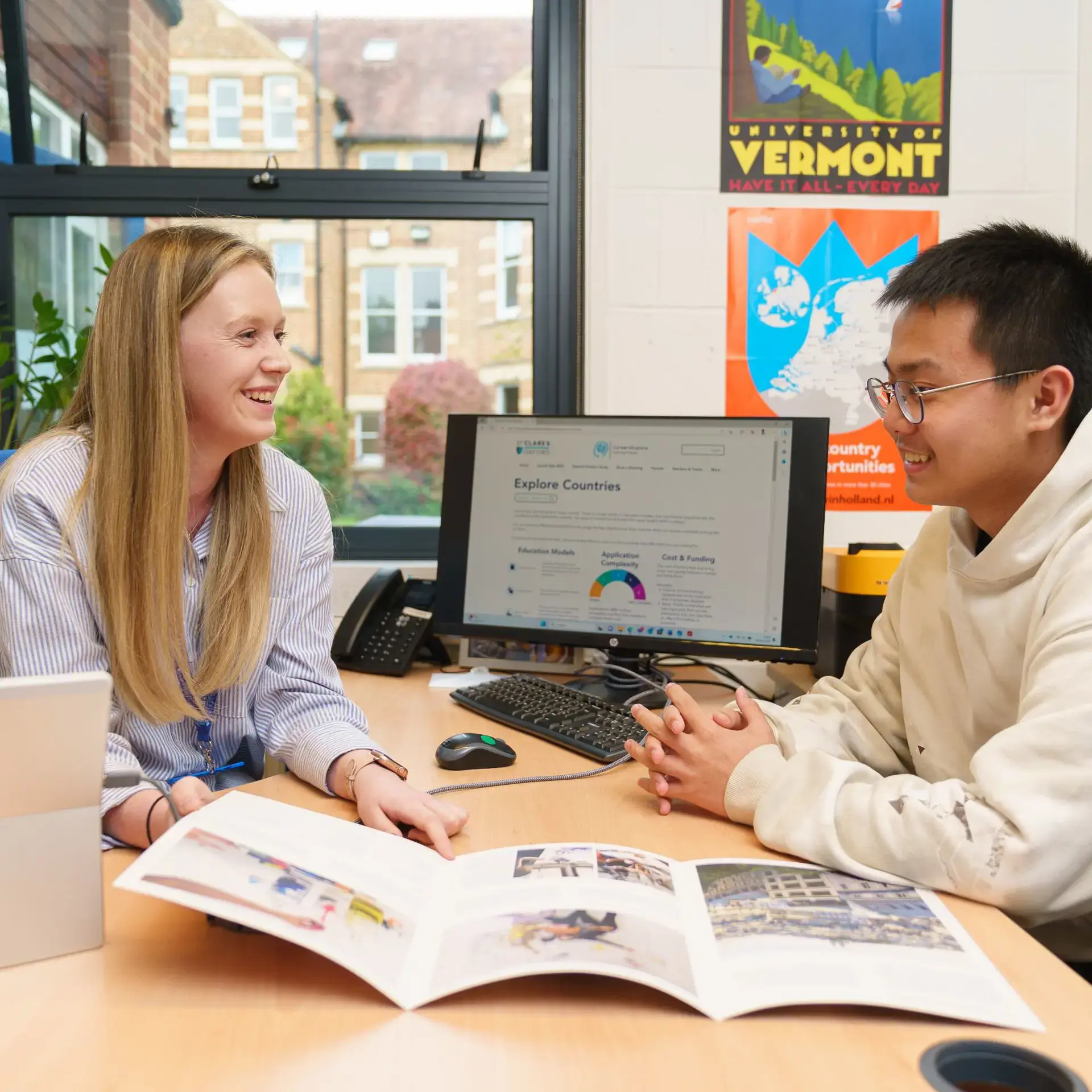
| Our University and Careers Counselling team provide individual support and a rigorous careers programme to help our students reach the best university, internship, or gap year experience for them. About 90% attend their first-choice university, including leading international institutions and competitive courses around the world. |
| 10. Global Impact, Guided by Purpose |
| Founded after World War II, St Clare’s is driven by our mission to “advance international education and understanding.” Students are encouraged to think critically, challenge ideas, collaborate across cultures, and engage with real-world issues – graduating ready to make a positive difference in the world. |
Of the 31 IB Diploma 2026 graduates who studied our Pre-IB programme:
Pre-IB vs. GCSEs
Choosing the right pathway at 15–16 can shape your future. While GCSEs are a well-known UK qualification, they are not designed with the IB Diploma in mind. Our Preparatory IB Programme is purpose-built to give students the skills, confidence, and flexibility they need to thrive in the IB and beyond:

Core Elements
These core elements create a holistic programme beyond the classroom, to help students acquire new skills and support their personal development.
PROGRAMME STRUCTURE

Courses
| Subject Area | Course Options | Hours Per Week |
|---|---|---|
| English | Tiered classes based on language proficiency for academic stretch | 4 |
| Languages | Based on previous experience:
| 4 |
| Maths | Tiered classes based on ability and prior experience | 4 |
| Science | Choose one course per term:
| 4 |
| Humanities | Choose one course per term:
| 4 |
| Arts | Rotation of all courses in Term 1 One option for Term 2 and 3:
| 4 |
*these subjects are subject to change
Course Details
| English |
| Builds students’ skills in reading, writing, speaking, and listening, while developing critical and creative analysis of diverse texts. Progress is assessed through classwork, writing, and presentations, and enrichment activities like theatre trips, clubs, and the school magazine enhance their appreciation of literature and communication. |
| Languages |
| Includes Comparative Literature, Continuation French, Ab Initio Chinese and Spanish, and EAL support. Students develop listening, speaking, reading, and writing skills through diverse texts, focusing on identities, experiences, and social organisation, with assessments on communication, fluency, analysis, and presentation in various contexts. |
| Maths |
| Develops logical, critical, and creative thinking through Number and Algebra, Functions and Trigonometry, and Probability and Statistics. Assessment includes classwork, homework, quizzes, projects, and participation, with enrichment via extension tasks, Maths Club, competitions, and Oxford lectures. |
| Biology |
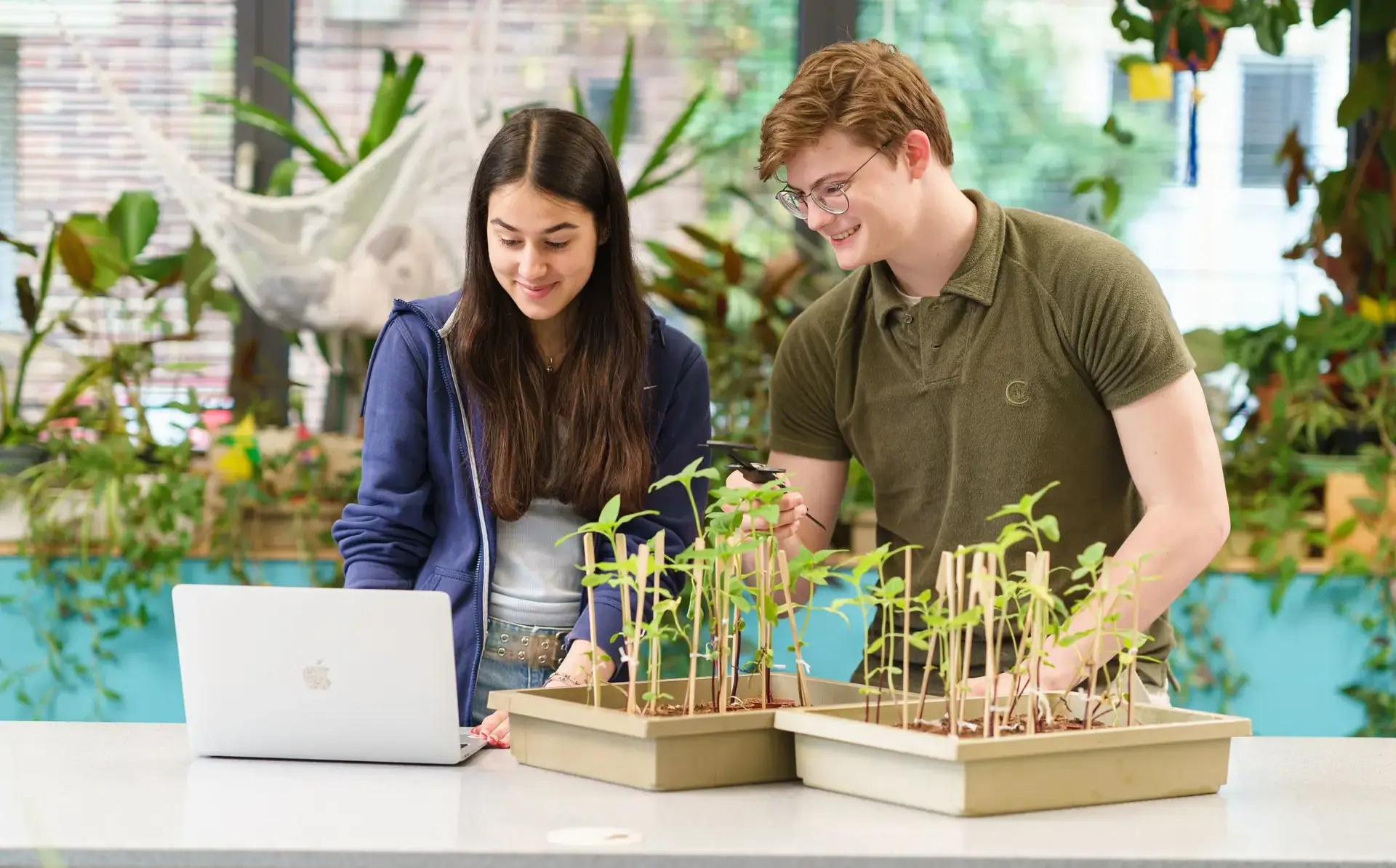
| Develops core scientific skills, including planning investigations, analysing data, and effective communication. Assessment includes exams, interdisciplinary projects, and skill records, with enrichment through research resources and a Natural History Museum visit. |
| Chemistry |
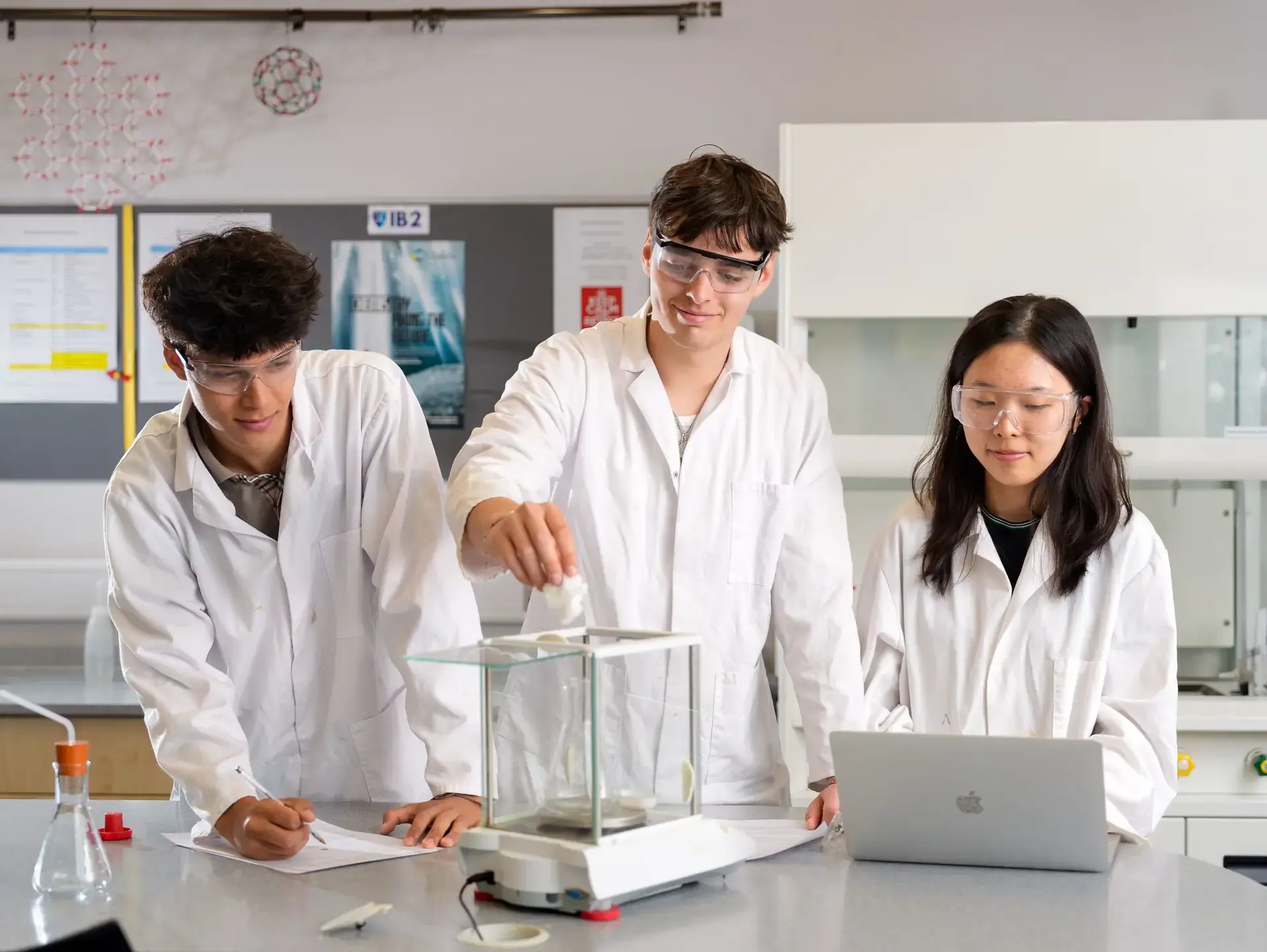
| Covers key concepts including particle theory, atomic structure, compounds, acids and bases, stoichiometry, and an introduction to organic chemistry. Students develop practical, analytical, and communication skills, and are assessed through safe investigations, data analysis, exams and scientific reporting. |
| Physics |
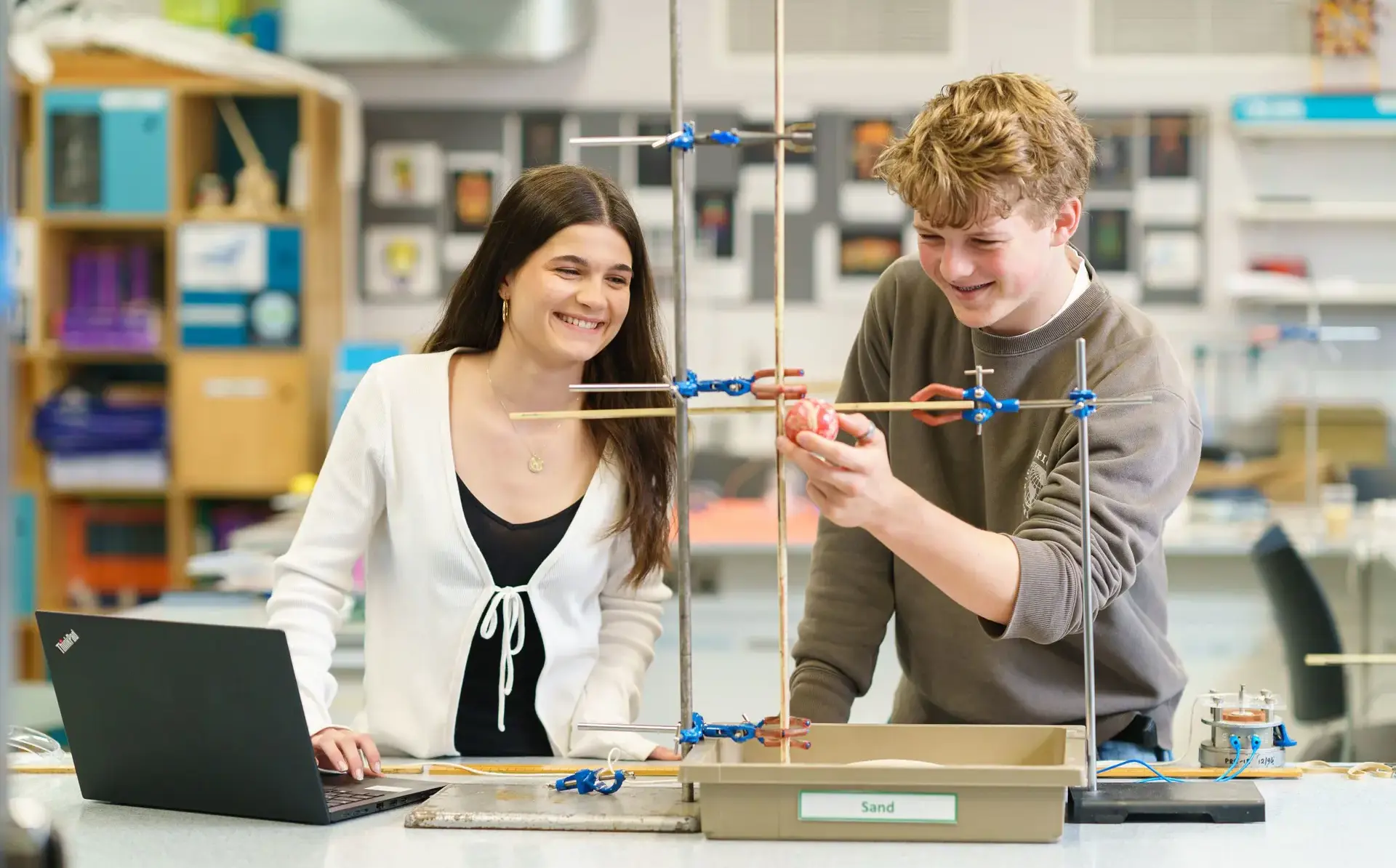
| Focuses on Energy, developing core skills such as planning investigations, observing and analysing data, and effective communication. Assessment includes term exams, interdisciplinary projects, and a Core Skills record. |
| Environmental Systems and Societies (ESS) |
| Combines scientific and social approaches to explore environmental systems and human interactions. Students develop research, investigation, and critical thinking skills, assessed through quizzes, discussions, projects, and exams, with enrichment via practical data collection and research projects. |
| Computer Science |
| Teaches programming, systems, and problem-solving, developing computational thinking and communication skills. Assessment includes tests and projects, with enrichment via coding challenges, lectures, and tech research. |
| Economics and Business |
| Introduces business types, marketing, decision-making, and microeconomics, developing problem-solving, communication, and critical thinking skills through case studies, presentations, essays, and enrichment activities. |
| Geography |
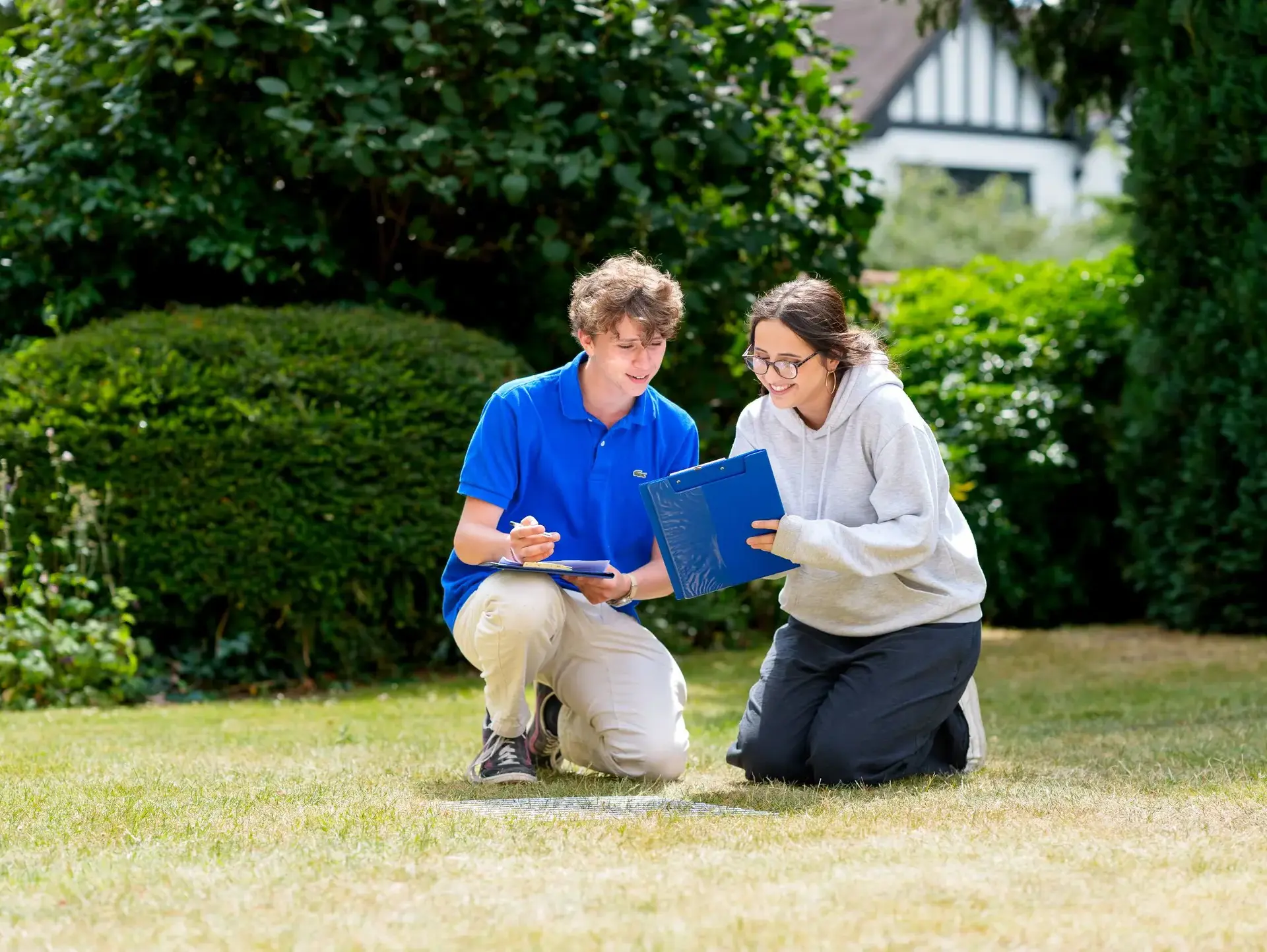
| Explores interactions between societies and the environment, developing research, analytical, and essay-writing skills. Assessment includes quizzes, projects, presentations, exams, and fieldwork, with enrichment through local data collection and geographical enquiry. |
| History |
| Develops skills in source analysis, research, essay writing, and debate through the study of conflict. Assessment includes quizzes, projects, presentations, and exams, with enrichment via lectures and expert events in Oxford. |
| Psychology |
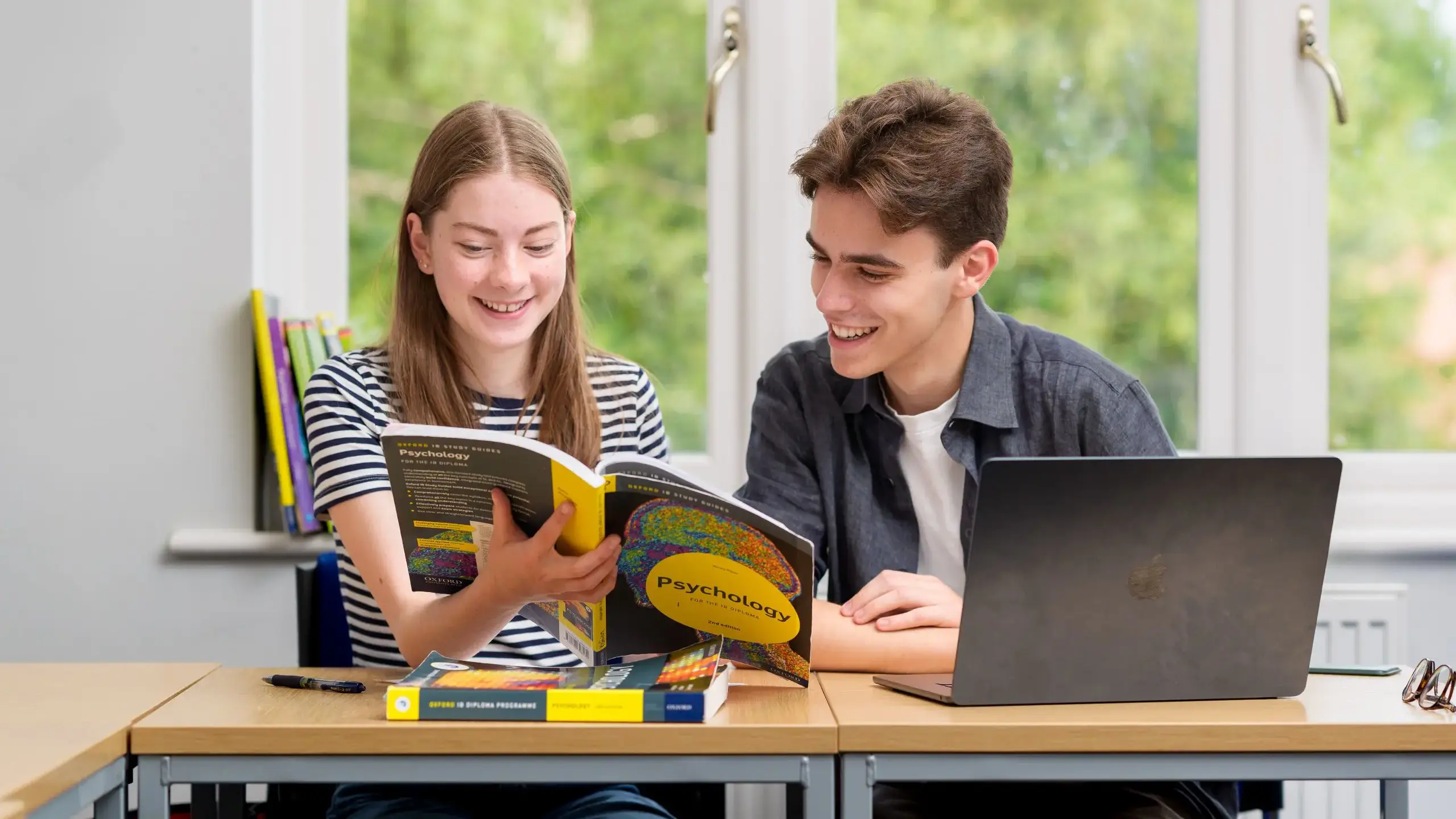
| Introduces memory, learning, relationships, and social psychology, developing critical thinking, research, and communication skills. Assessment includes quizzes, discussions, projects, and exams, with enrichment through lectures, online resources, and neuroscience competitions. |
| Visual Arts |
| Supports students of all skill levels to develop ideas and techniques across 2D, 3D, and digital forms. Assessment includes process portfolios, exhibitions, and comparative studies, while enrichment offers workshops, gallery visits, and opportunities to showcase work college-wide. |
| Digital Arts |
| Develops skills in digital and analogue image-making, multimedia experimentation, and visual literacy. Students explore artistic principles, record processes in sketchbooks, and are assessed on sketchbooks and final artworks, with feedback guiding skill development, presentation, and critical analysis. |
| Music |
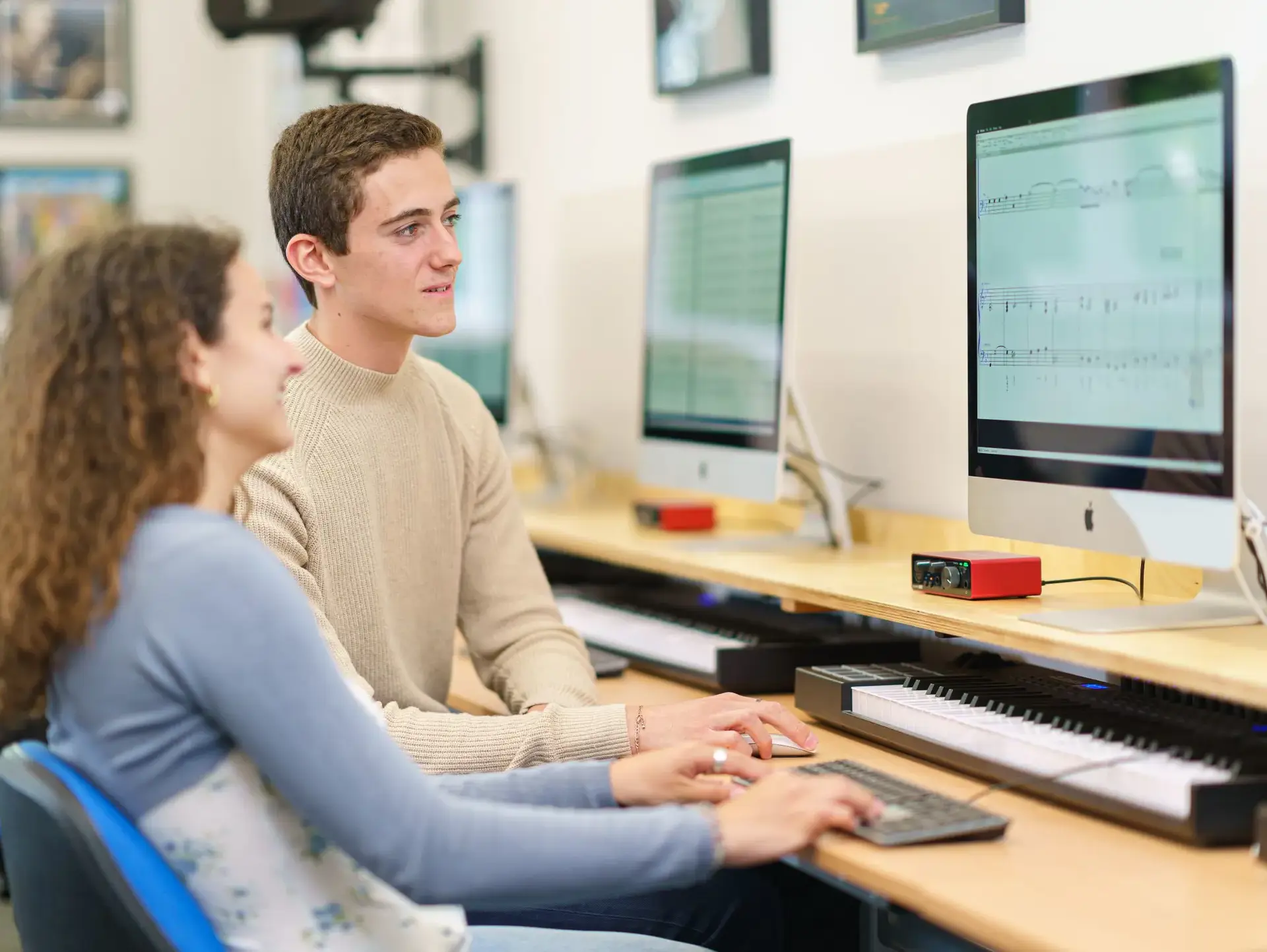
| Develops theoretical and practical skills across classical, popular, and world music styles. Students learn music theory, composition, performance, and production, assessed through tests and projects, with enrichment via ensembles, concerts, trips, and CAS opportunities |
| Theatre |
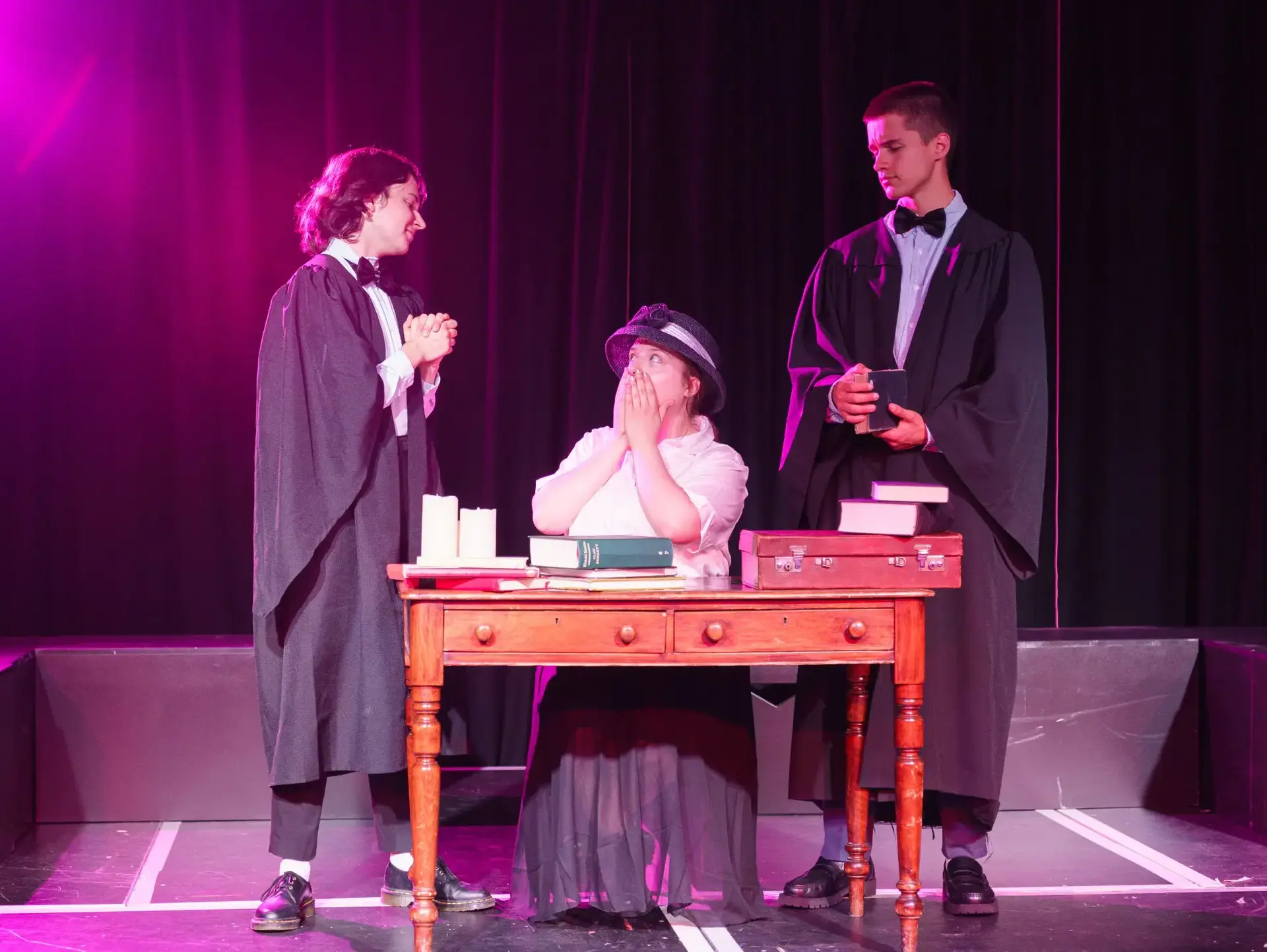
| Cultivates practical and writing skills through performance, creation, and evaluation, fostering communication, teamwork, and research abilities. Assessment combines practical projects and reflective coursework, with enrichment via workshops, theatre trips, digital performances, and college-wide showcases. |
Additional Elements
- Friday evening activities for the first half of term help students settle in, make friends, and feel part of the school community
- An Arts project culminating in an arts exhibition, theatre performance and music concert
- An activities programme, with planned activities on off-timetable days, and weekend excursions to different locations throughout the year
Student Stories
More Student Stories
Discover what's next.
Begin your path to success.
Explore courses, connect with us, and unlock your potential.